
To celebrate QCP’s 50th anniversary, we’ve decided to dive into the products, projects, and people who put us on the map. Each month, we’ll put together each piece of the puzzle to give you a complete picture of who we are, what we care about, and where we’re going.
There’s so much that goes into getting to your 50th year. QCP is proud of our existing lineup of standard products and custom capabilities, but today, we’re looking back on the products that have shaped who we are as a company and made us a leader in the industry.
Before incorporating QCP, then Quick Crete Products Corp, founder Fred Crook worked at his uncle’s concrete plant, where he learned how to make utilitarian pieces. This experience laid the groundwork for QCP, which was founded in 1976. From the early days with the Palm Bench to our more recent innovations with multiple mediums, these are the most defining QCP products to date
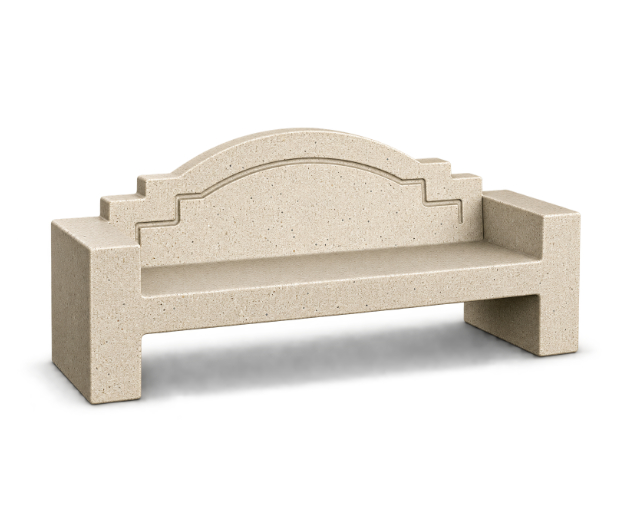
Six years after Quick Crete Products Corp was incorporated by Fred Crook and his wife Cathy, the Palm bench was introduced as the company’s first real design, says QCP CEO Rick Crook. With no designers on staff, Fred tapped Orange County residential architect Michael Martin.
“It was designed for the Palm Springs airport, and then the city started adopting it elsewhere,” Rick explains. “Michael Martin designed the bench, and then the planter, waste container, and bollard all fit together for a whole series. I don’t know if people were really doing that—creating an entire collection.”
Martin made sure all of the radii matched, and the width of the planter was designed to fit at the end of the bench for a collected look. Each piece shared the same reveal, which made for a more cohesive series.
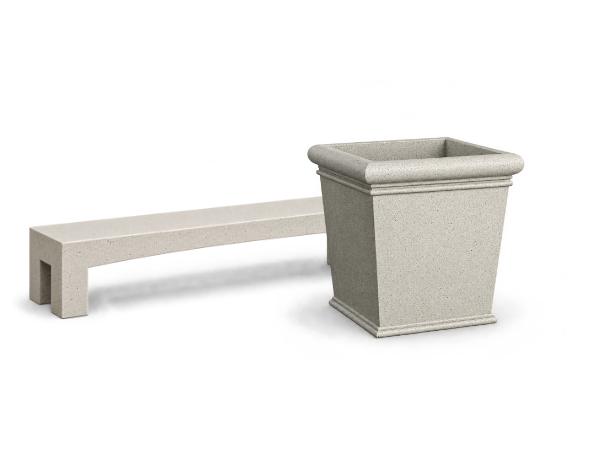
Martin helped QCP with the Palm, and then followed it up with the Classic series, which was another series of planters, waste containers, and benches. Those collections allowed us to compete in the marketplace.
“I think the proportions really work on the Classic Bench,” Rick says. “Martin had a really good sense of product design, in general, like getting the proper massing for each piece and getting them to work together. Those were big hits in the beginning; we put them in the catalog, and they started selling.”
Similar to our latest collections with upcycled wood, like the newly released Sparrow system, the Classic bench was offered with a wood top.
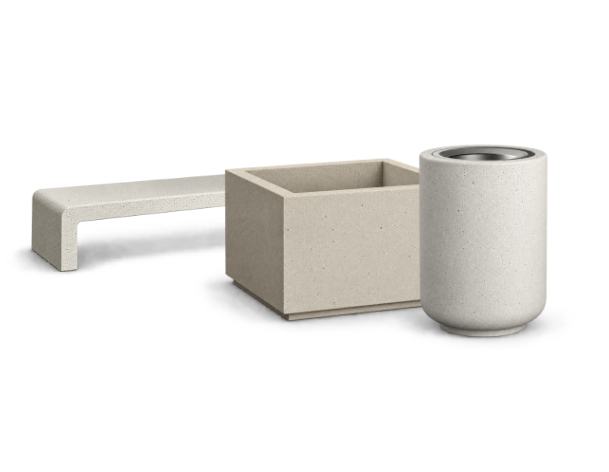
The California series came next. “Those were the first three core product series—the California, the Palm, and the Classic—and those were really what I was mainly selling for standard products, along with the picnic table,” Rick explains.
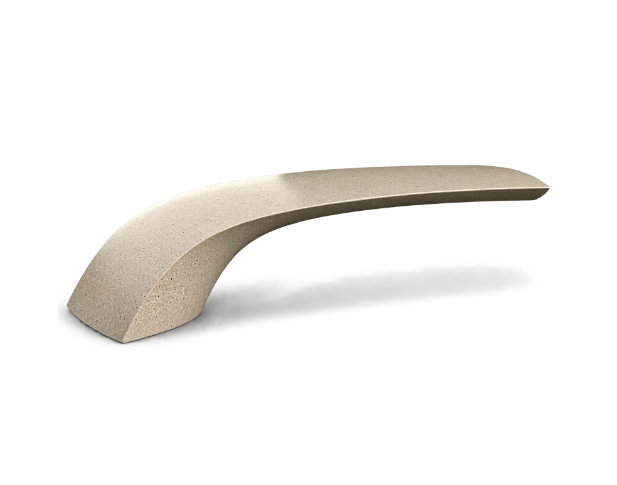
Decades later, QCP developed this bench in partnership with John Cook before showcasing it at the 2013 ASLA show in Boston. As perhaps our boldest gesture yet, we put just one product at the booth: the Gesture bench.
“Mia Lehrer, FASLA, founder and President of Studio-MLA, walked through the booth,” Rick recalls. “It was the first time I ever met her, and I stopped her and asked if she wanted more information on the Gesture bench. She looked around the booth and said, “You're Quick Crete? No way.’ I think she, along with other landscape architects, really started thinking about us in a different way.”
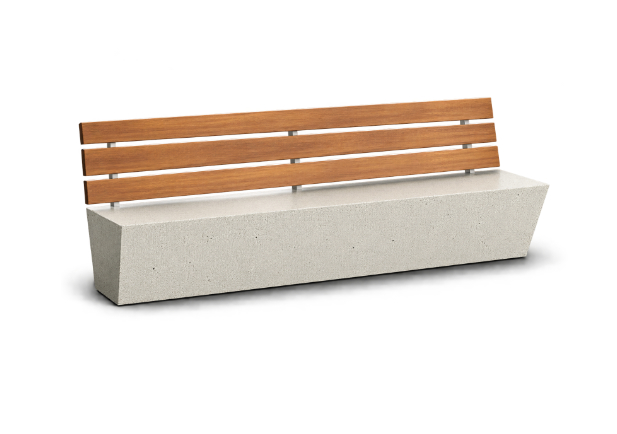
“2013 was a big year for us,” Rick recalls. “Not only did we collaborate with John Cook, but we also started working with Cliff Garten.”
Garten, an internationally renowned sculptor and the creative director and founder of Cliff Garten Studios, tapped QCP to build his precast ribbon benches at 50 United Nations Plaza in San Francisco.
“Cliff really understood the capabilities of precast concrete,” Rick adds. “The collaboration on 50 UN Plaza worked so well we kept it rolling, and Cliff designed the Shear collection for us, which consisted of a bench, waste container, planters, bollard, and a bike rack.”
The Shear collection ultimately led to the Cliff Garten-designed Agora collection of planters. “13 years later, Cliff’s designs are still selling well and resonating with today's landscape architects,” Rick says.
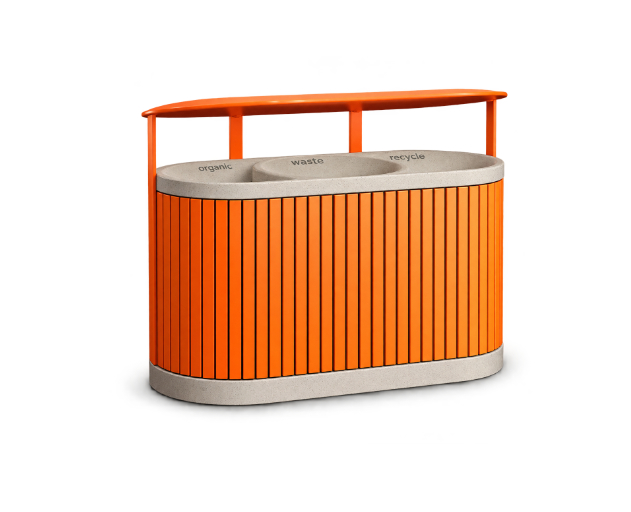
In 2023, the Merge was the focal point of our booth at ASLA in Minneapolis. Available in a mono, duo, and trio form, this versatile waste container combined three materials—precast concrete, wood, and steel—ushering in a new era of QCP following the acquisition of Canterbury Designs.
“This really merged the three different materials,” Rick says. “They all come together with this waste container. I see this as a product that’s once again changing the perception of who we can be.”






.svg)
.svg)