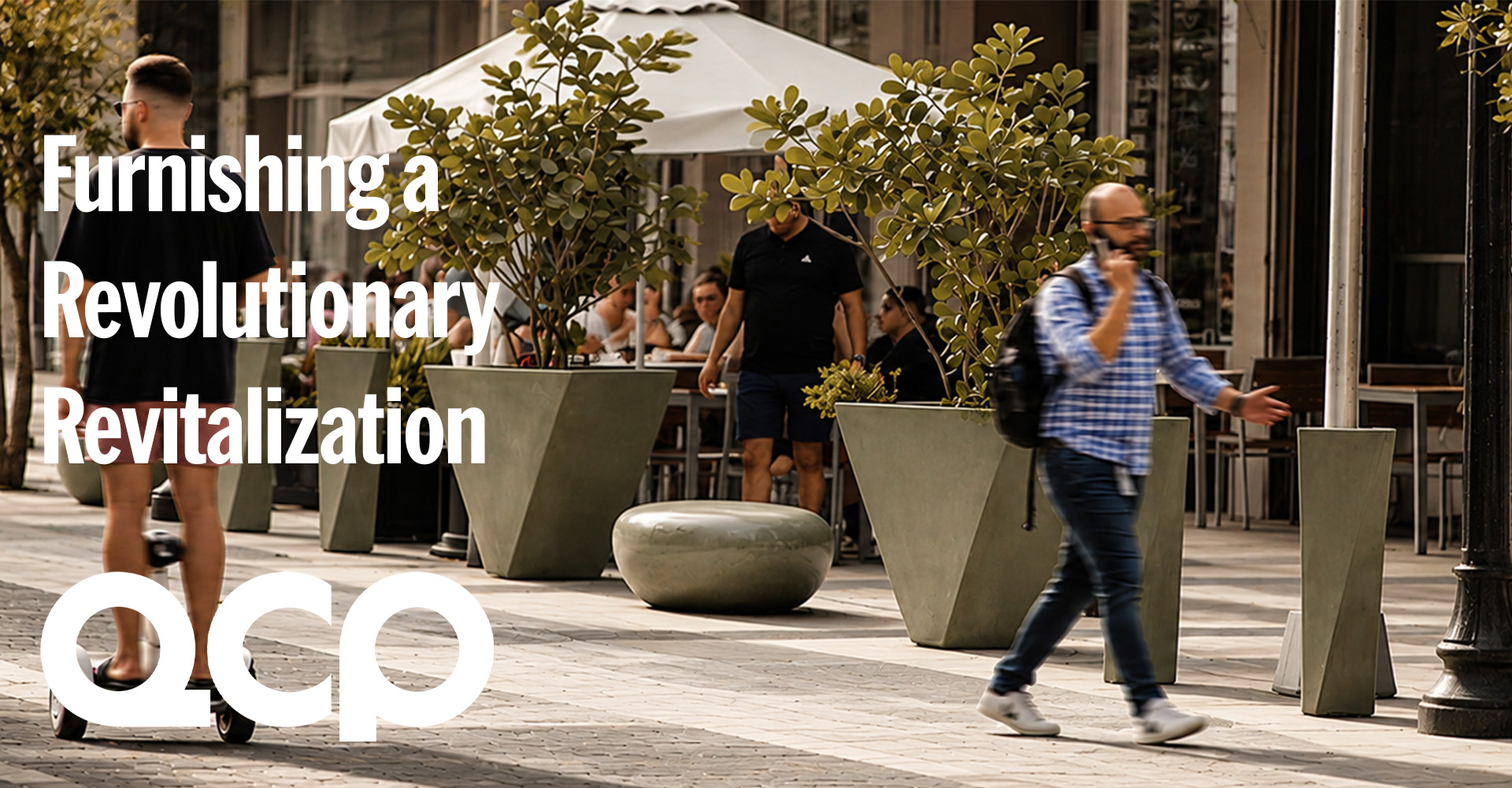
Miami, FL, July 6, 2026 - From the 1920s to 1940s, Flagler Street in Downtown Miami served as a thriving epicenter of the southeastern metropolis. Over the years, however, it developed a serious problem: There wasn’t any shade. After moving to Miami in 1987, landscape architect and principal of Curtis + Rogers, Jennie Rogers, remembers the street as the place to go for luggage, cheap electronics, and fabrics. In an effort to revitalize the once-highly trafficked area, longtime developer Moishe Mana spent millions—and nearly two decades—transforming it into a “global hub for technology, art, fashion, and innovation.”
Rogers and her team at Curtis + Rogers have worked closely on the project since 2010. After bypassing major renovations due to complicated underground systems, she prioritized making way for new, natural suncoverings.
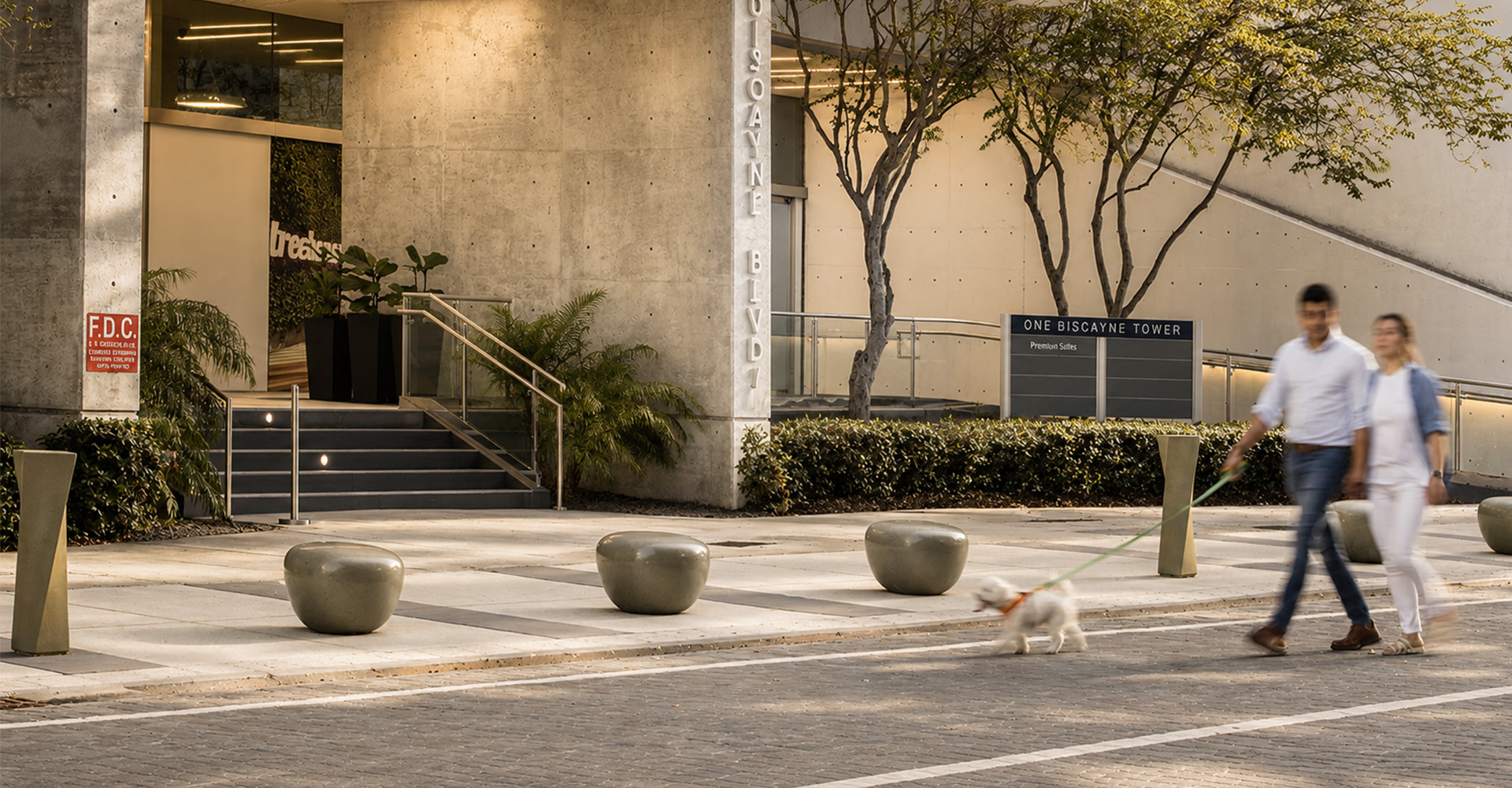
“We were tasked with getting shade,” she explains. “We did manage to get some trees, but it required people thinking differently. Everywhere else in Downtown Miami plants trees in these tiny places, and they don't grow. These trees are planted with infrastructure that will allow them to actually develop into full trees.”
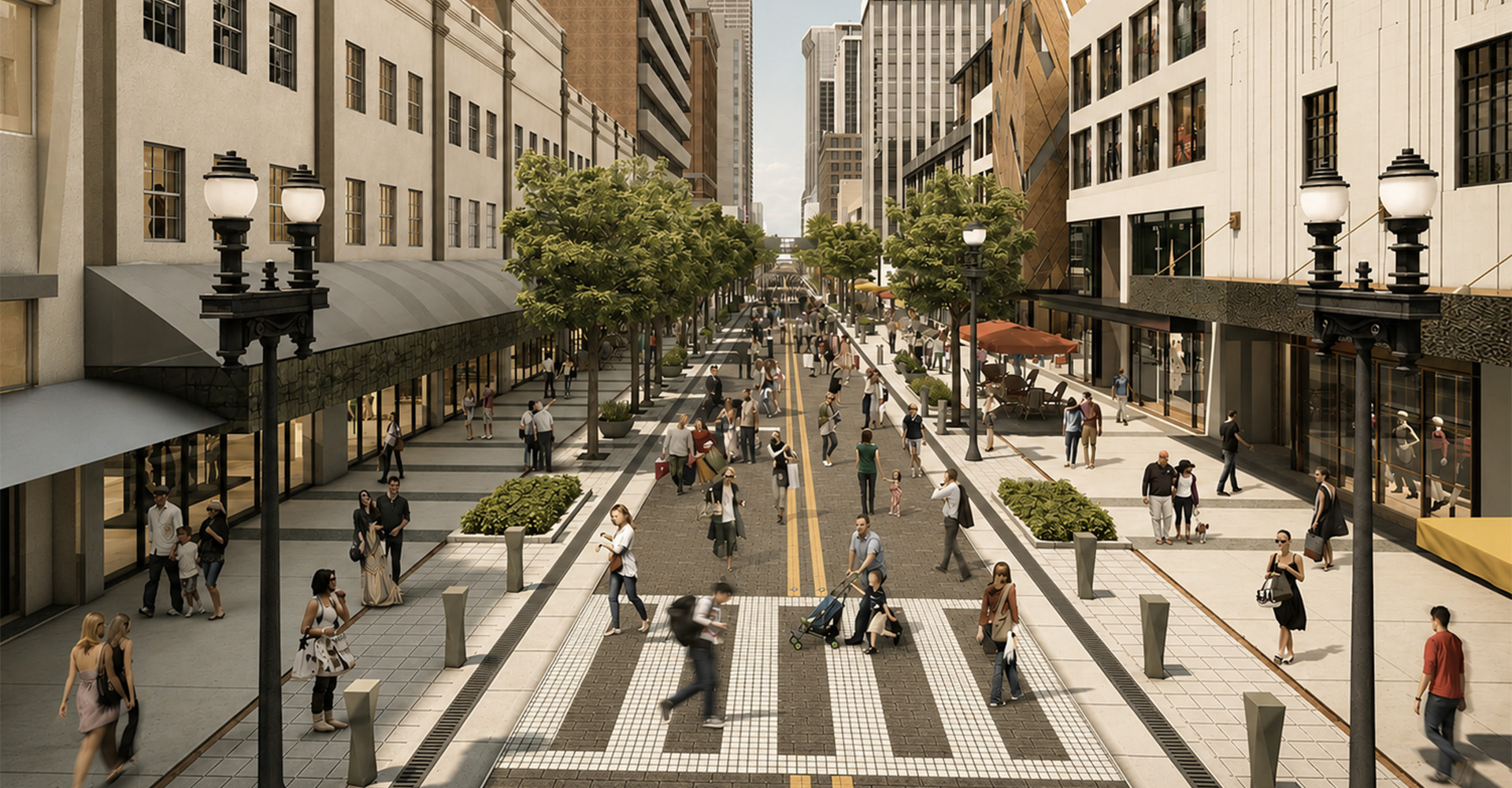
This history-making project made a portion of Flagler Street a curbless, festival-style street that required bollards. Rogers also envisioned seating to create a more flourishing gathering spot for visitors, which is where QCP’s Shear bollards, Kernel seating, and Twist benches were brought into the conversation.
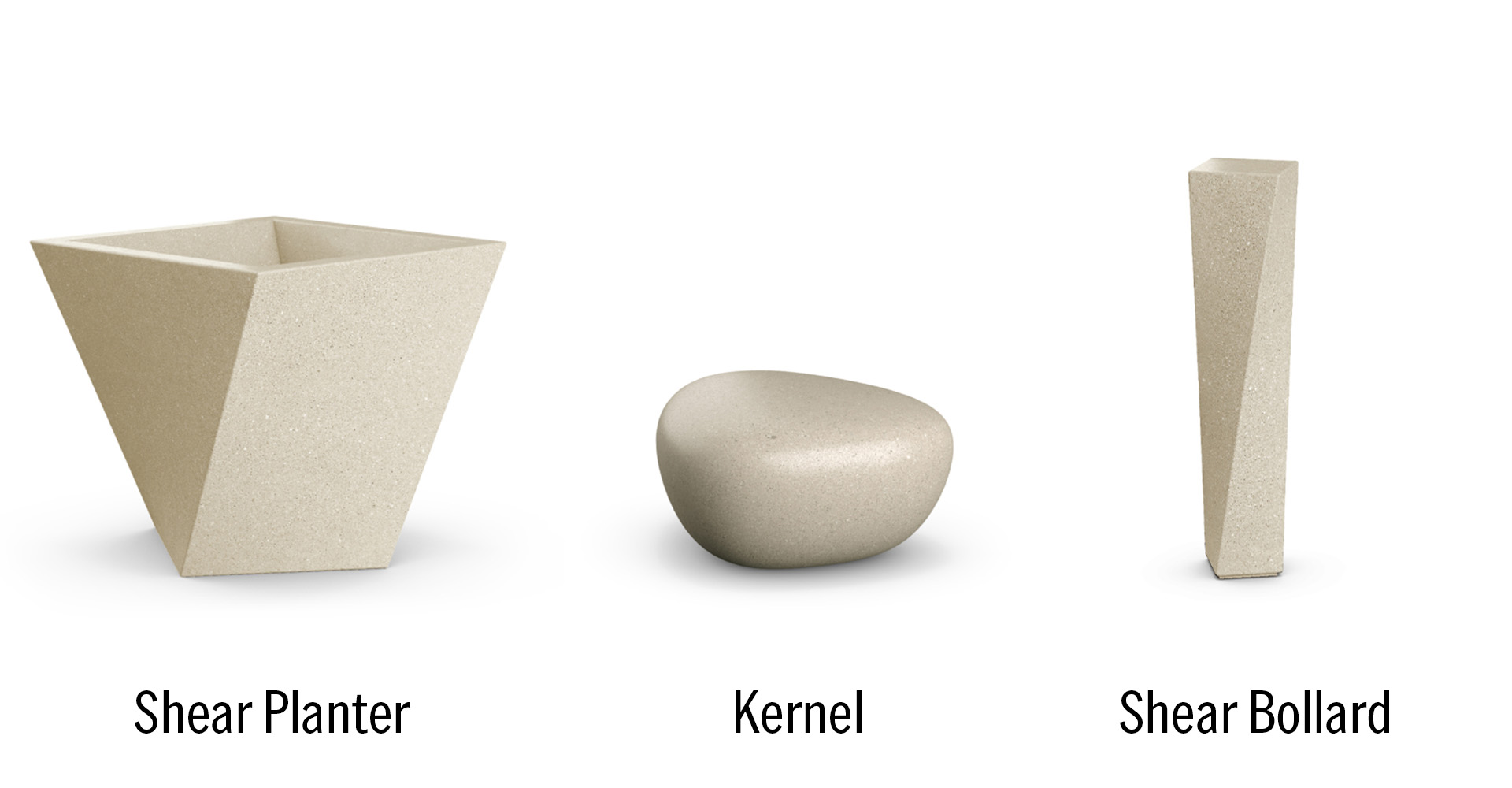
“Instead of a whole row of bollards, we wanted to try furnishings and things,” Rogers says. “The Kernels first drew us to the project, and we were able to see what they looked like after they were installed at a local park.”
The bollard element is where style meets function, providing more structure to the curbless road, while also creating a unique pattern with the assembly of Shear bollards.
“Bollards typically are fairly mundane, but the Shear is so sculptural.” adds Rick Crook, CEO of QCP. “They’re much more than bollards; they almost become artwork. Plus, the choice of color made such a significant impact on the aesthetic of the street, and the honed concrete is not only easier to clean, but also looks so good.”
For QCP, this project marks our continued efforts to manufacture site furnishings across the country, and particularly in the southeastern United States.
“We were so excited to contribute to such a significant project in southern Florida, and we’re committed to being a player in this market,” Crook says. “I was recently in Miami, and it was one of the first places I visited because it was such a great story of how that project has really brought that part of the city back to life. We love projects like that.”







.svg)
.svg)